

1 Sept 2026 · Anzy Crochets
Why a crochet rakhi, and why it takes so long to make one
A crochet rakhi is about ninety minutes of work for something that costs less than two hundred rupees. Here is where that time goes — and why we still make them.
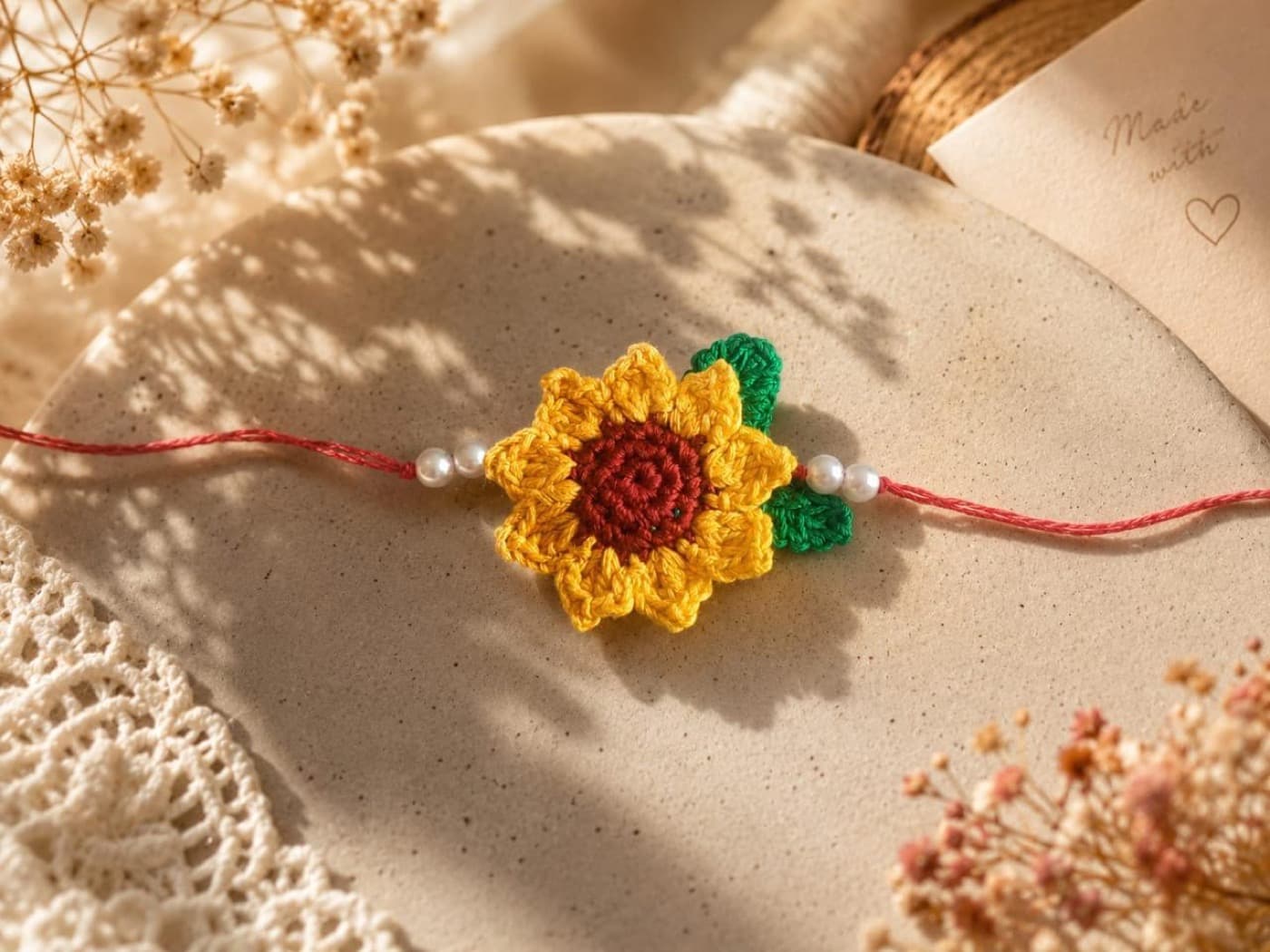
Every August we make rakhis, and every August someone asks why they cost what they do when the shop down the road sells a packet of five for fifty rupees.
The honest arithmetic
A sunflower rakhi is about ninety minutes. Forty of those are the flower itself — two rounds of petals in different yellows, worked one petal at a time around a maroon centre. Twenty more for the leaves. The rest is the cord, threading the pearls, and finishing the ends so they do not fray on the first day.
The machine-made ones take no minutes at all, because no person touched them.
Why it matters for a rakhi specifically
A rakhi is worn for one day and then kept. Almost everyone keeps them. That is the strange thing about the object — it is designed to be temporary and it never is.
So the thing you are really choosing is what sits in that drawer or on that desk in five years. A foil-and-plastic rakhi does not survive that. Cotton thread does.
What we actually do differently
Tie cords, not elastic. Elastic perishes and it digs in over a long day. Our cords tie, which means they fit any wrist and stay comfortable.
No sharp findings. Nothing metal against the skin except the occasional pearl or gold spacer, threaded so it sits on the cord rather than against the wrist.
And we make them one at a time, which is slow, and is the reason we run out before the day itself most years. If you are ordering, order early.